I don’t know why I ended up in Jordan. It was never on my radar; never a bucket list place to visit for me. I didn’t know much about the country even upon arrival. Israel is close by. Syria borders the north; go east and you’ll hit Iraq. But the country opened itself up to me – the surreal landscapes, open hospitality, and unparalleled sights to see. I’m glad I spent time here, and I’d now recommend Jordan to anyone who is interested in exploring the region.
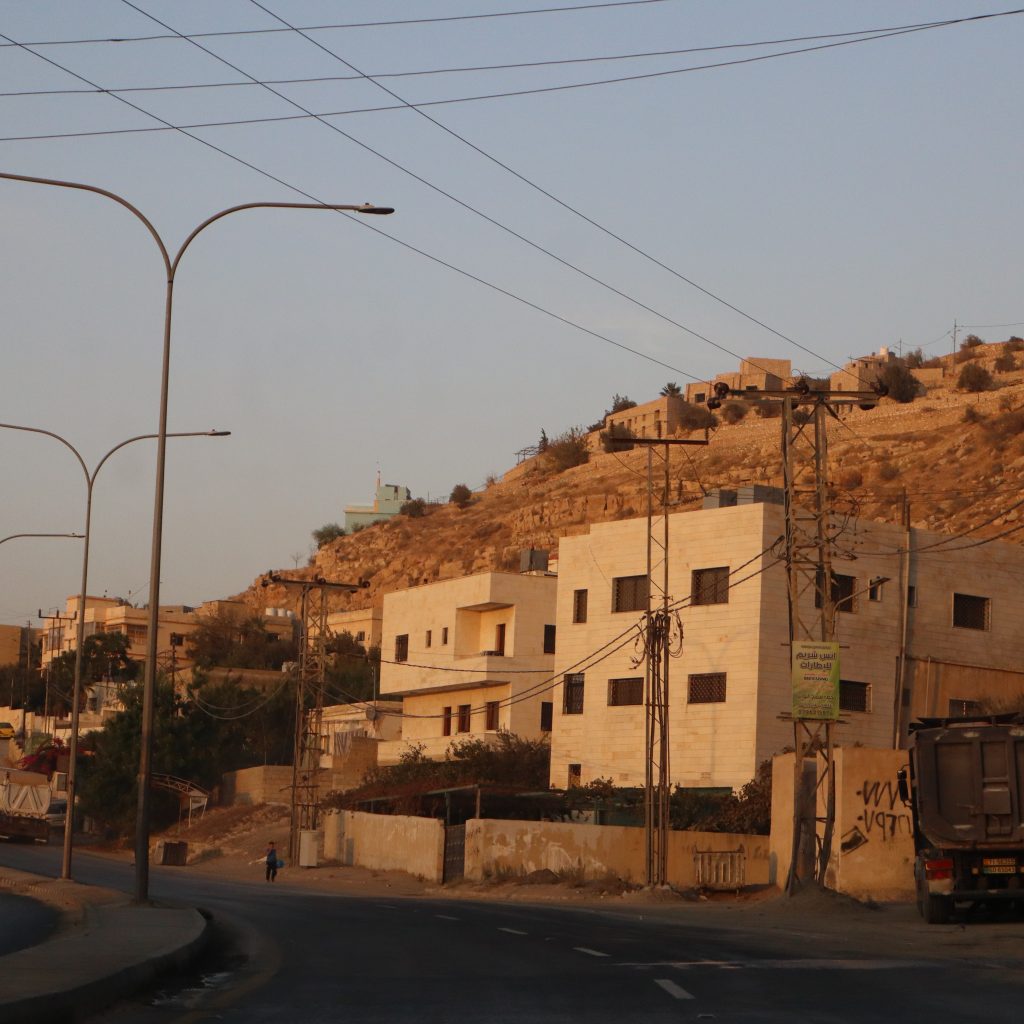
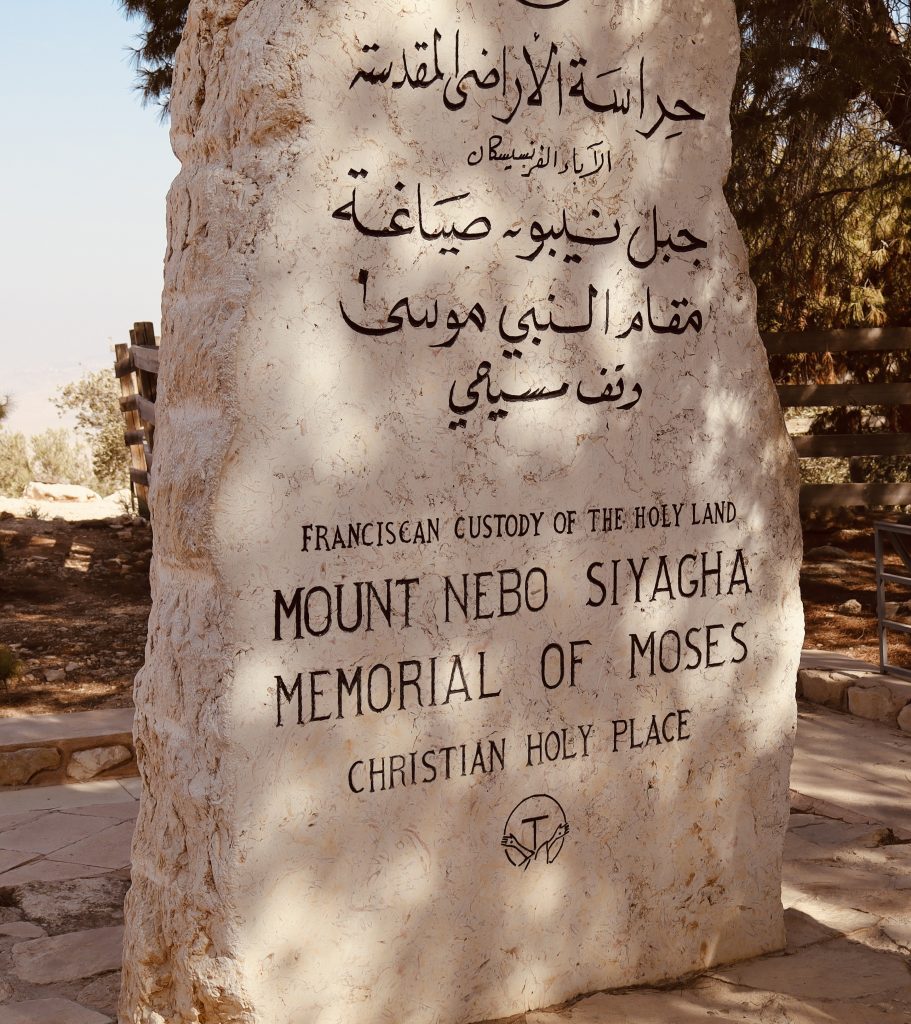
I didn’t have a plan for how I was going to visit the sights in Jordan either, until I met some Turkish guys at my hostel in Amman. I was staying right off the 2nd Circle – literally, Jordan’s capital city is split up by roundabouts with numbered names up to 8 – and I had loose plans to idly meander around the Circle City during my few days there. Maybe find a neat museum. But Hulusy and Sedat had real plans, and they asked me to tag along. A driver was hired, and we made our way to Madaba (mentioned in the Bible) and Mt Nebo (also in the Bible, where Moses was granted a view of the Promised Land before he died).
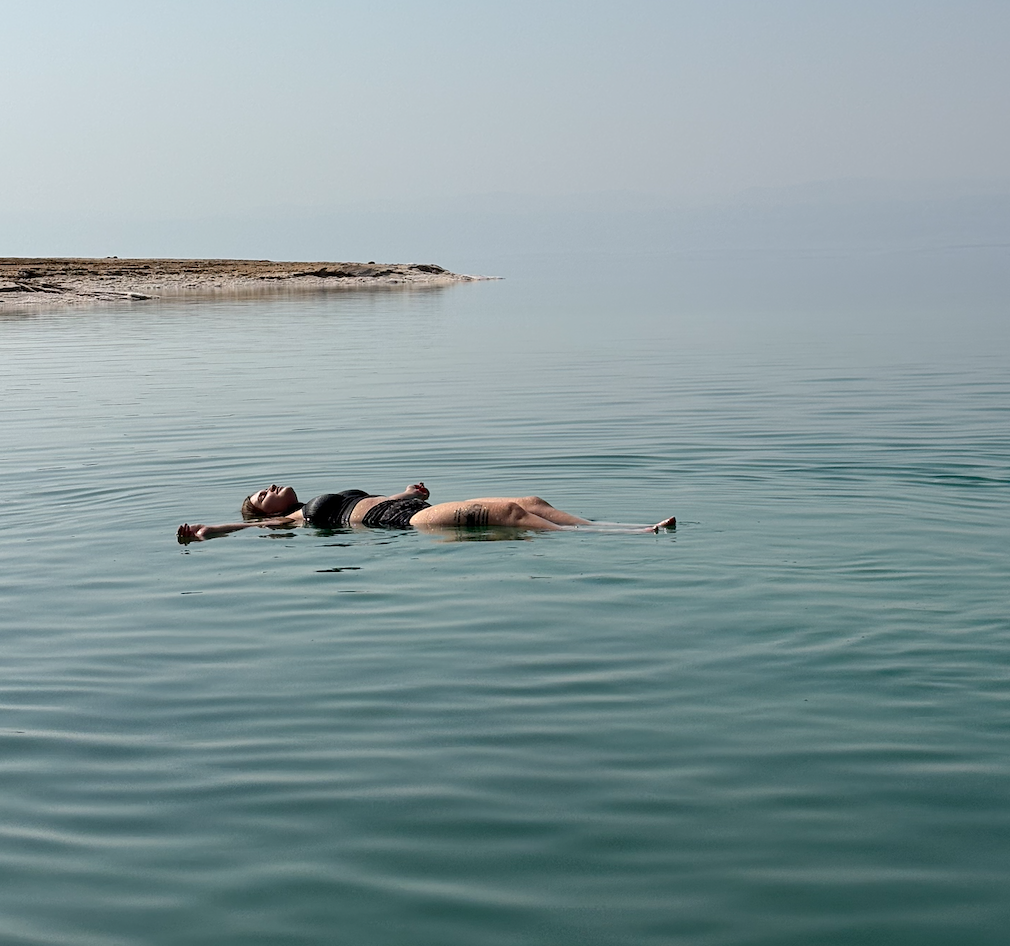
After we were done seeing what Moses saw, we left civilization and cell service behind. I was clinging on to the handle in the front passenger seat as our driver was literally drifting around corners of winding death-trap mountain roads with no guard rails. We were headed to the lowest land point on Earth, 1,443 feet (439 meters) below sea level: the Dead Sea. A landlocked body of water between Jordan and Israel that is over nine times saltier than the ocean. It’s impossible for life to survive (hence the name) – it is possible to effortlessly float, impossible to sink. On our way back to Amman, I looked up from my phone to see a camel happily joyriding in the back of a Toyota pick-up truck while our driver was enjoying his Arab music on max volume.
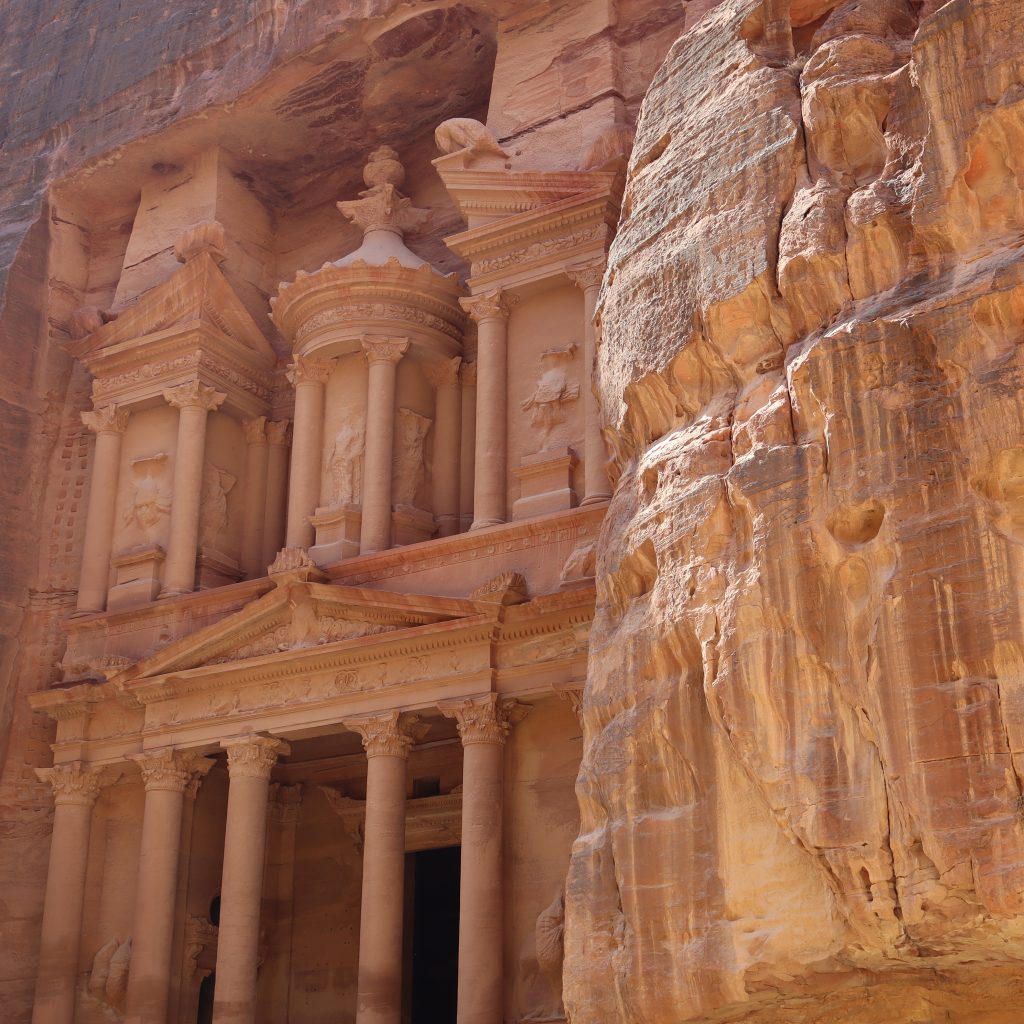
I woke up at 5:30am the next morning. Hulusy and Sedat arranged a tour to Petra for us. A Wonder of the World, inhabited since prehistoric times, I was thinking, as I rode a horse through the entrance and walked the rest of the way to the famous Al-Khazneh Treasury building. Petra is an ancient city carved from red rocks in immense detail. It’s easy to get lost in – a network of passages, cisterns and reservoirs, tombs and public offices, temples and churches and monasteries. The history is astonishing, the preservation remarkable, the views truly one of a kind.
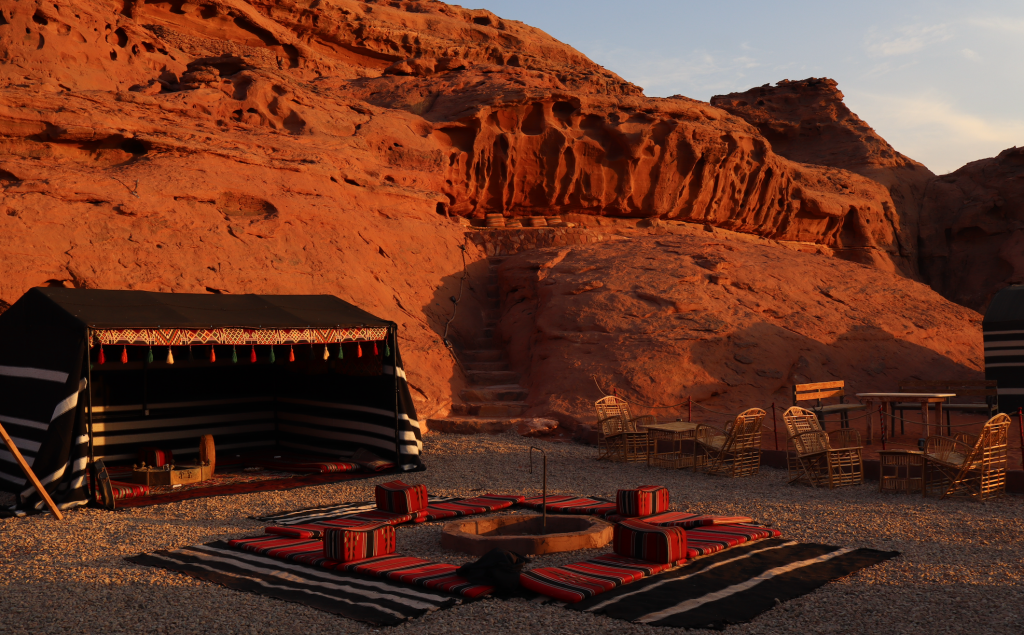
A few hours of sleep later, I took a JETT bus to Wadi Rum Desert Visitor Center, where my volunteer host Khaled met me. The bus ride was a four hour trip through the country. An older American couple “adopted” me on the ride – feeding me snacks and treating me to a karak çay. On arrival, a few Bedouins asked me which camp I was headed to. When I said Khaled’s, they all responded with That’s my uncle! He’ll be here soon. Indeed, he was there soon, and I hopped in his pick-up truck and we drove about 20 minutes straight into the desert where there are no marked roads. He knows where he’s going just from rock formations and the few camps scattered about.
Khaled was born an uncle. He’s the 18th child out of 28. He has around 170 nieces/nephews and counting. It goes without saying that the family doesn’t celebrate birthdays. I asked Faris, a nephew, when his birthday was, and he said he didn’t remember. I have to check my ID when I need to know. In Bedouin-Muslim culture, a man is allowed up to four wives but only as long as he can financially provide for each of them a quality of life that is either equal to or above the life she had at home. Khaled’s father was married to three women. Essentially, the whole Wadi Rum Bedouin tribe is one family, Khaled’s family.
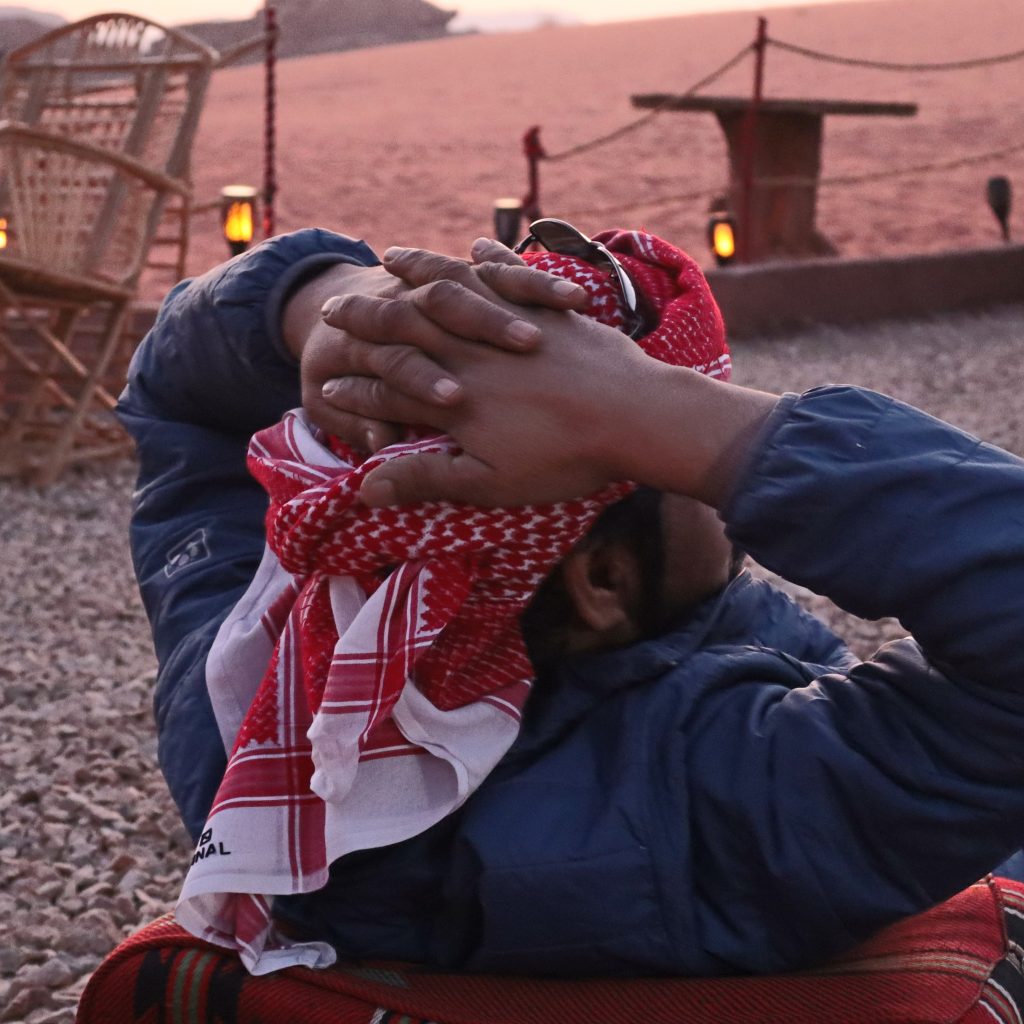
Bedouins are desert-dwelling, traditionally nomadic Arabs. Bedouin tribes exist in deserts around the Middle East – Jordan, Egypt, Saudi Arabia, Oman, Syria, and Iraq. For centuries, their tribes moved through the desert with herds and caravans across the Arabian Peninsula. Their knowledge of the land made them essential navigators. They speak their own dialect of Arabic that’s distinct from Jordanian Arabic. There are still some areas of the desert where the Bedouin groups live completely traditionally by moving from place to place, self-sufficiently and sustainably. However, many are now taking a more modernized route by offering their camps to tourists, making money while still maintaining their heritage. I decided to spend two weeks at a Bedouin camp in Jordan, and I chose Khaled’s. It was another volunteer experience – I would help with basic cleaning and dinner prep, and in exchange I could stay at no cost.
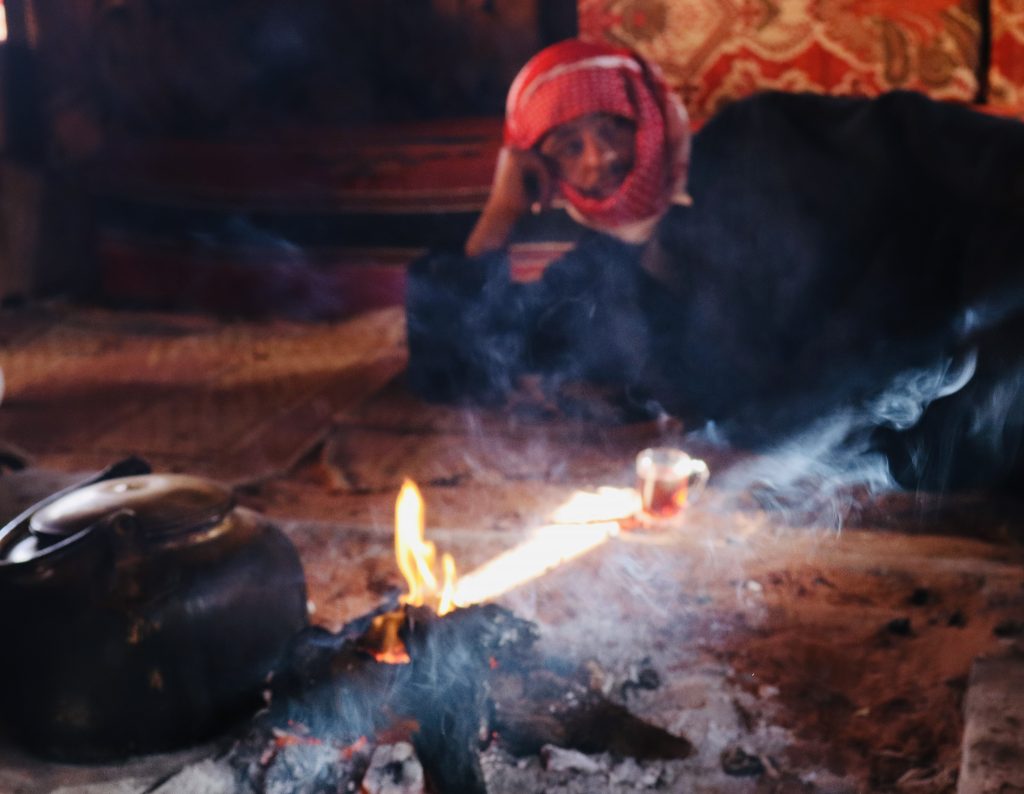
Khaled was born at this camp. His family has been established there for generations. He has spent most of his life in this desert, and he doesn’t have much of a wish or a reason to leave. With Khaled and his family, I ate in traditional Bedouin-style food circles where we are all sharing the dish. They would cook food in a Zarb most nights – a hole in the sand with hot coals at the bottom; they’d put the chicken and vegetables on top, shovel the sand over it, slow cook for three hours, and it would come out delicious. Every night, we’d sit in a circle around the fire (Bedouin TV) and drink a lot of tea (Bedouin whiskey) that was heated in a pot hanging over the fire. I slept in a tent each night, and during the day if I went for a walk outside of the camp I’d wrap the scarf around my head so that if a sandstorm arose I could easily cover my face.
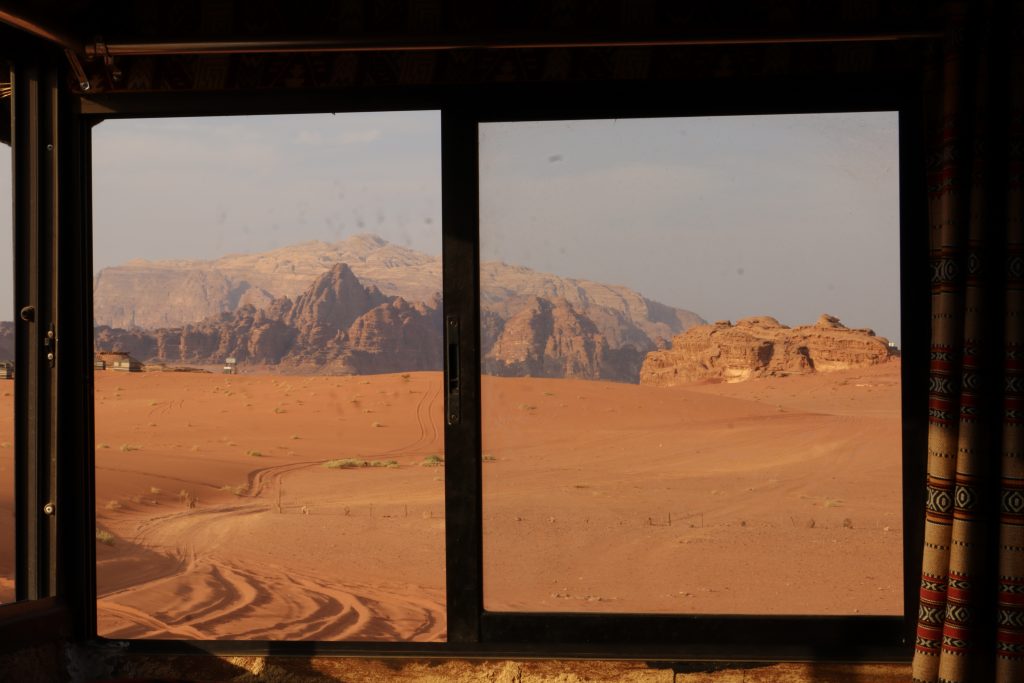
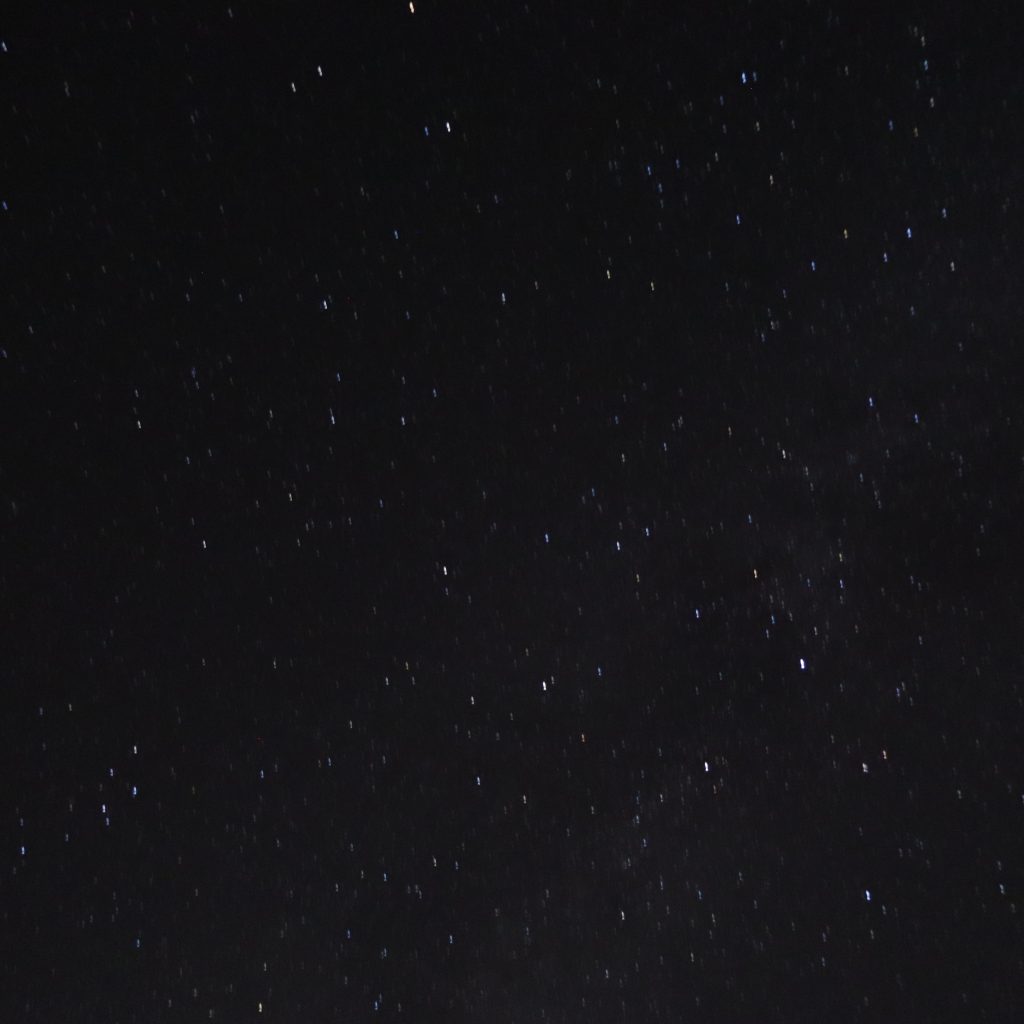
Life at the camp was quiet. Off-grid. Electricity is solar-powered and the water tank had to be filled manually with water from the Wadi Rum Village, outside the desert. I asked how to do my laundry, and a few minutes later Subhi (who also lives here) was standing outside my tent with a bucket and soap: Emmy! Here. In addition to hand-washing clothes, I read novels. A lot. Learned how to play dominoes, got better (or maybe worse) at chess. Saw camels in the distance, and was told to watch for scorpions. Unfortunately, I came face-to-face with a monster-sized desert spider that made me extremely distrustful of the camp restroom. I spotted wild hedgehog tracks and heard stories of the wolves attacking the goats at nighttime. When it got dark, Khaled would point out the different constellations, and we’d climb to the top of rocks to get a better view of the dozens of shooting stars that could be seen each night.
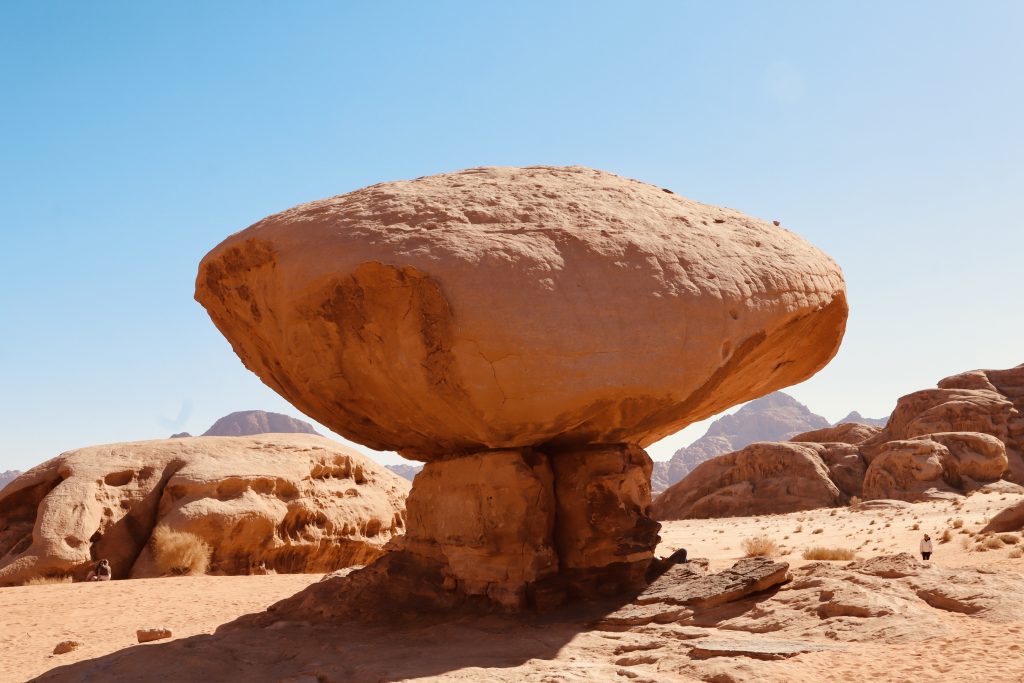
I left the camp by truck a few times, but mostly to see more of the same landscape in Wadi Rum. The sights there include a rock shaped like a chicken, a rock shaped like a mushroom, a rock shaped like a bridge, and rocks that are good for sitting in the shade. If you’re not interested in rocks, there are a lot of dunes. I tried sandboarding down one, and didn’t enjoy the sand in every crevice of my clothing. The landscape is Mars-like – The Martian movie with Matt Damon was filmed in this desert. I’m not sure I would voluntarily choose to spend two weeks without leaving a desert again, but I’m glad I had the experience once.
15 days in Wadi Rum later, I hopped in Khaled’s pick-up truck again and he took me back the way we came. 20 minutes later, I was on the pavement. It was almost like a reintegration into society – I was remarkably excited to see a stoplight. My hot shower that night at my new location was heavenly. I’ve never appreciated the convenience of a corner store more in my life. Off-grid living, especially in a wilderness like a desert, is full of lessons. I don’t think it’s a lifestyle I could live long-term, but I have a lot of respect for Bedouin culture and similar ways of life.
Subscribe for post notifications!
Follow my Instagram @stepsineverycorner and my TikTok @stepsineverycorner for travel updates and dives into other topics.
***Use my promo code STEPSIN25 for a Worldpackers membership discount!***
Leave a Reply